Building Wildfire Resilient Communities in Europe (FiRES)


Wildfires pose an urgent yet unsolved social problem in Europe with more people living at-risk than ever before. This is due to a four-decade increase in the frequency, scale, and intensity of wildfires in southern, central, and northern Europe alike. Communities therefore need to be better prepared to act in an informed manner, and this requires a scaling up of social solutions. Since August 2023, Dr. Christine Eriksen has led FiRES – a five-year project funded by the Swiss National Science Foundation to study wildfires resilience among at-risk communities in Europe. After an initial two years at University of Bern, the project is now hosted by ETH Zürich.

Principal Investigator,
ETH Zürich
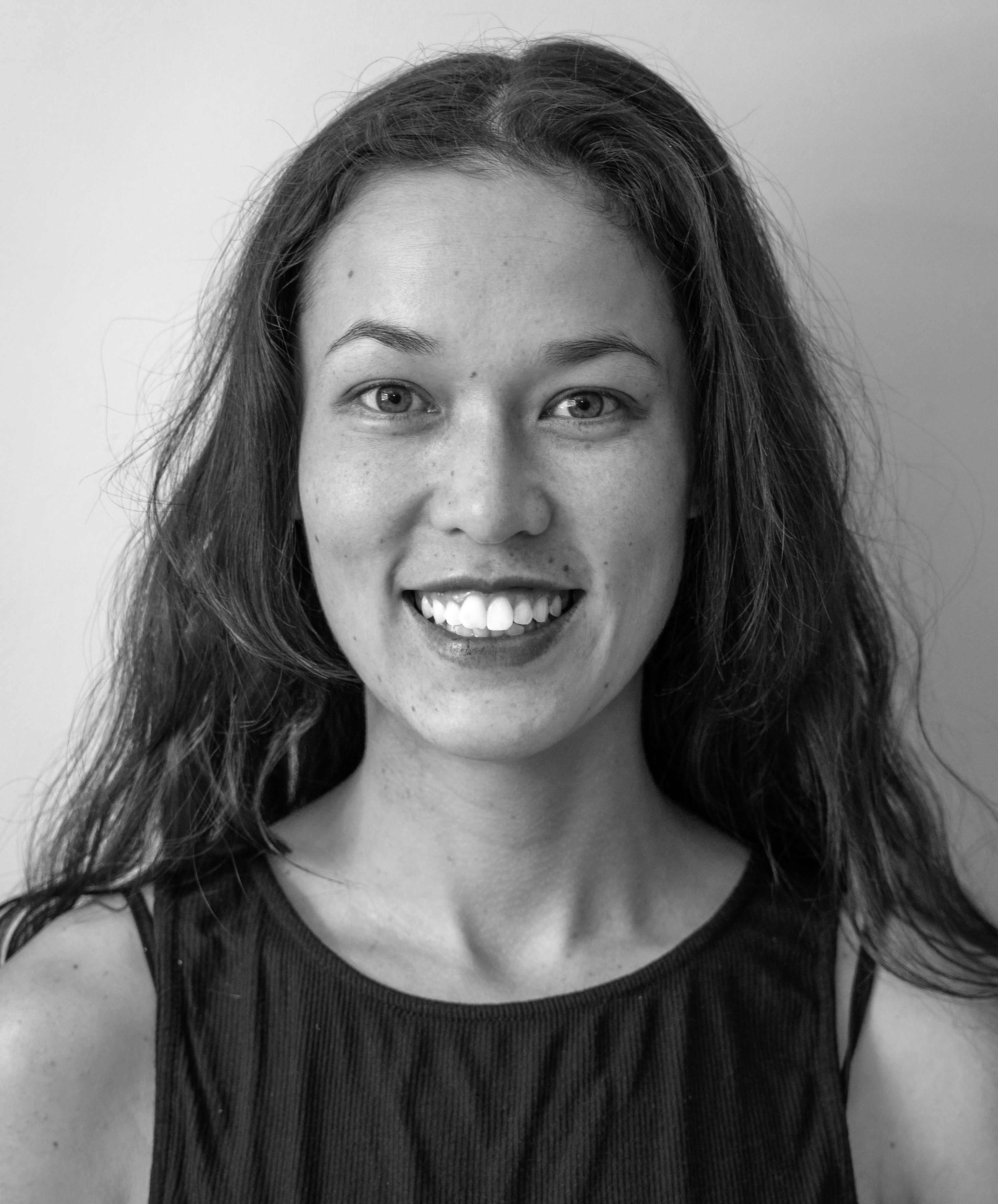
Postdoctoral Researcher,
ETH Zürich
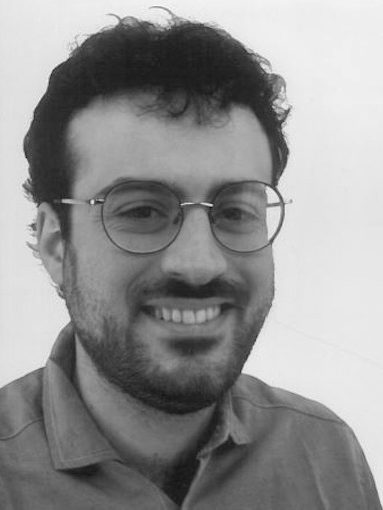
Doctoral Candidate,
ETH Zürich

Masters Student,
Graduated 2025,
UniBe
Research Assistant,
ETH Zürich
FiRES uses a comparative case study design to investigate the diverse social geographies of wildfire across rural, regional, and urban-interface sites in Europe. It engages residents, land managers, community groups, and fire practitioners to advance knowledge of social vulnerability and coping capacity.
FiRES aims to answer two key questions:
- What factors make people able and willing to prepare for wildfires?
- What factors enable people to respond to and recover from wildfires – physically and mentally?
This will be achieved through three objectives:
- Description: a systematic, comparative and comprehensive empirical study of how social vulnerability and coping capacity are tended to and modified through human-wildfire interactions across European fire-knowledge regions.
- Understanding and theorization: produce thick descriptions of lived experiences of wildfires through in-depth narrative interviews and case study research.
- Collaboration and application: assist with the building of wildfire resilient communities by assessing factors that enable people to prepare, survive, and recover from wildfire across temporal and spatial scales, and through the collaborative development of a wildfire preparedness enhancement methodology.
FiRES seeks to address two critical problems:
- The apparent disconnect in Europe between the fiery reality of climate change, the inability to control catastrophic wildfires, and the need for ‘individual wildfire preparedness’, reveals both a fundamental lack of public awareness of what makes wildfires deadly and how to mitigate these risks, and a problematic reliance on technocratic (technical, top-down) approaches to civil protection. These issues are exacerbated by climate change and shifts in land use. It renders people unnecessarily vulnerable.
- The strong focus on quantitative vulnerability measures and economic cost calculations, which tend to dominate assessments of climate-related hazards in Europe, omits the important intangible costs wildfires inflict on everyday functionality, physical and mental health, and the long-term damage to cultural heritage and ecosystems. This problem stresses how a lack of societal awareness of wildfire’s manifold impacts can undermine short- and long-term coping capacity.
FiRES investigates social dimensions of wildfire in countries that range from fire-prone Mediterranean Europe, and the Alps, to the growing risk of wildfire in northern Europe. This geographical span encompasses three fire-knowledge regions with two case study countries in each region:
- Wildfire-prone countries that have experienced catastrophic wildfires with significant losses (Catalonia/Spain, Attica/Greece).
- Wildfire-known countries that have experienced catastrophic wildfires, without recent mass casualties (Italy, Cyprus).
- Wildfire-expected countries where wildfire is a growing challenge (Switzerland, United Kingdom).
An Advisory Board consisting of members with valuable experience of research grants, knowledge co-creation and practical outputs provides constructive feedback to the FiRES project on a regular basis:
- Dr. Gareth Clay, Professor of Geography, University of Manchester, England.
- Dr. Núria Prat-Guitart, Knowledge and Applied Science Manager, Pau Costa Foundation, Catalonia, Spain.
- Dr. Tim Prior, Head of Department (Civil Protection) / Chief of Staff (Cantonal Crisis Organisation), Canton Bern, Switzerland.
June 16, 2026
FiRES PhD student Filippo Zeffiri’s research compares official wildfire risk management strategies and local fire practices through interviews with extensive animal herders and firefighters in mountainous regions of Europe. Filippo’s interest in this topic grew from his Masters research, which has just been published in the journal Fire Ecology. Titled, “The macchia is a garden”: wildfires, pastoralism and landscape ideologies in the Aurunci Mountains, Italy”, the article focuses on one of Italy’s most wildfire-affected areas.
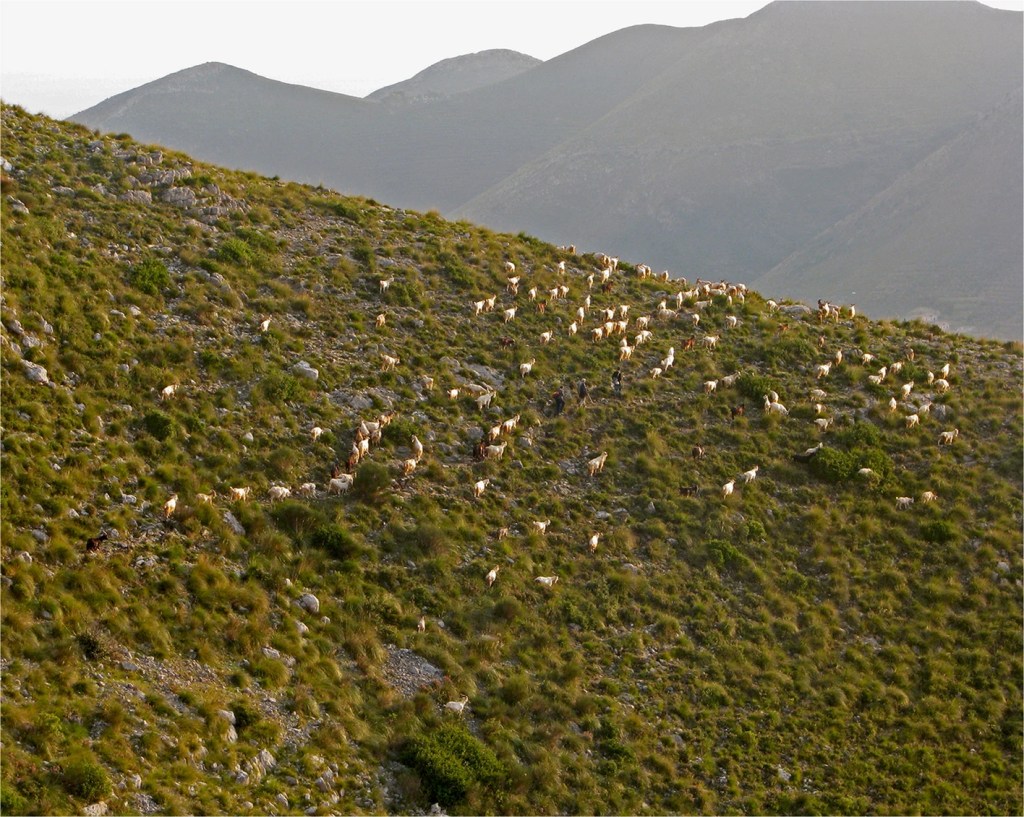
Together with Dario Novellino, Filippo conducted a series of narrative interviews in 2022 with local stakeholders, including pastoralists, farmers, firefighters, forest rangers, and natural park personnel. The interviews focused on land use change, change in space and landscape perception, and traditional fire practices. The research results highlight how different social actors present distinct landscape ideologies and perceptions of the environment, which inform their point of view regarding land use and fire management. On one hand, local pastoralists present a landscape ideology that emphasizes human intervention in the landscape, including the use of traditional fire practices for pasture renewal. On the other hand, representatives of local authorities took a hard stance on fire exclusion and minimal human intervention in the landscape. However, recent changes in local policies might indicate a shift in this attitude. Some participants also expressed a moderate, integrative viewpoint that shows some potential to bridge the cultural and ideological divergence between different groups. Many participants expressed a sense of grief related to the changing landscape and the disruption of the social-ecological system in the area. Based on these findings, Filippo and Dario argue that mediation between stakeholders with different landscape ideologies is essential to improve wildfire resilience and fire management in the Aurunci Mountains. However, harmonizing these views is challenging due to conflicting perceptions of landscape and the relationships between people and the environment they live in. Thus, achieving consensus on wildfire prevention and management remains a significant challenge. As a first step towards a possible solution, they propose adopting participatory and transformative approaches in future research to promote a narrative of shared, desirable views of future fire management in the area.
Please join me in congratulating Filippo and Dario on the publication of a well-written article!
December 12, 2025
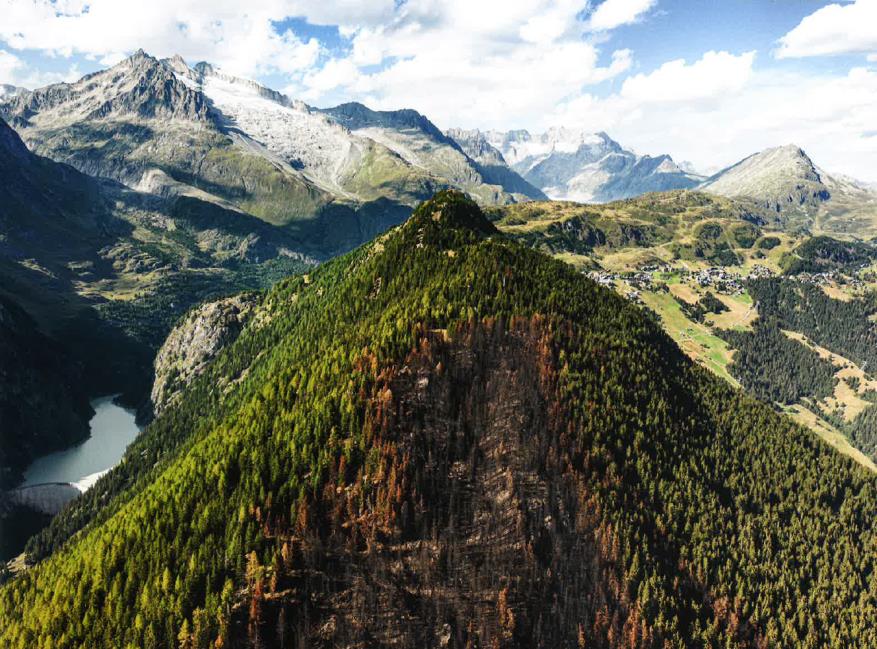
FiRES Masters student Lena Widmer has successfully completed her Masters project, which focused on the 2023 Riederhorn wildfire in Canton Valais, Switzerland.
A summary of her research findings is available in this blogpost.
Please join me in congratulating Lena on a job very well done!
September 29, 2025
New documentary: The Age of Fire
Earlier this year, Thomas Kulik and his team of documentary-makers from the ARTE science show ’42: The Answer to Almost Everything’ interviewed fire social scientist Christine Eriksen, fire historian Stephen Pine, and ecosystems scientist Kirsten Thonicke about the current wildfire crisis. How can society learn to (once again) coexist with fire? The documentary is a mixture of English and German (with English subtitles).
Neuer Dokumentarfilm: Wie viel Feuer braucht die Erde?
Anfang dieses Jahres interviewten Thomas Kulik und sein Team von Dokumentarfilmern der ARTE-Wissenschaftssendung „42- Die Antwort auf fast alles” die Sozialwissenschaftlerin Christine Eriksen, den Feuerhistoriker Stephen Pine und die Ökosystemwissenschaftlerin Kirsten Thonicke zur aktuellen Waldbrandkrise. Wie kann die Gesellschaft (wieder) lernen, mit Feuer zu leben? Der Dokumentarfilm ist eine Mischung aus Englisch und Deutsch (mit englischen Untertiteln).
March 24, 2025
October 15, 2024
August 19, 2024
June 27, 2024
June 14, 2024
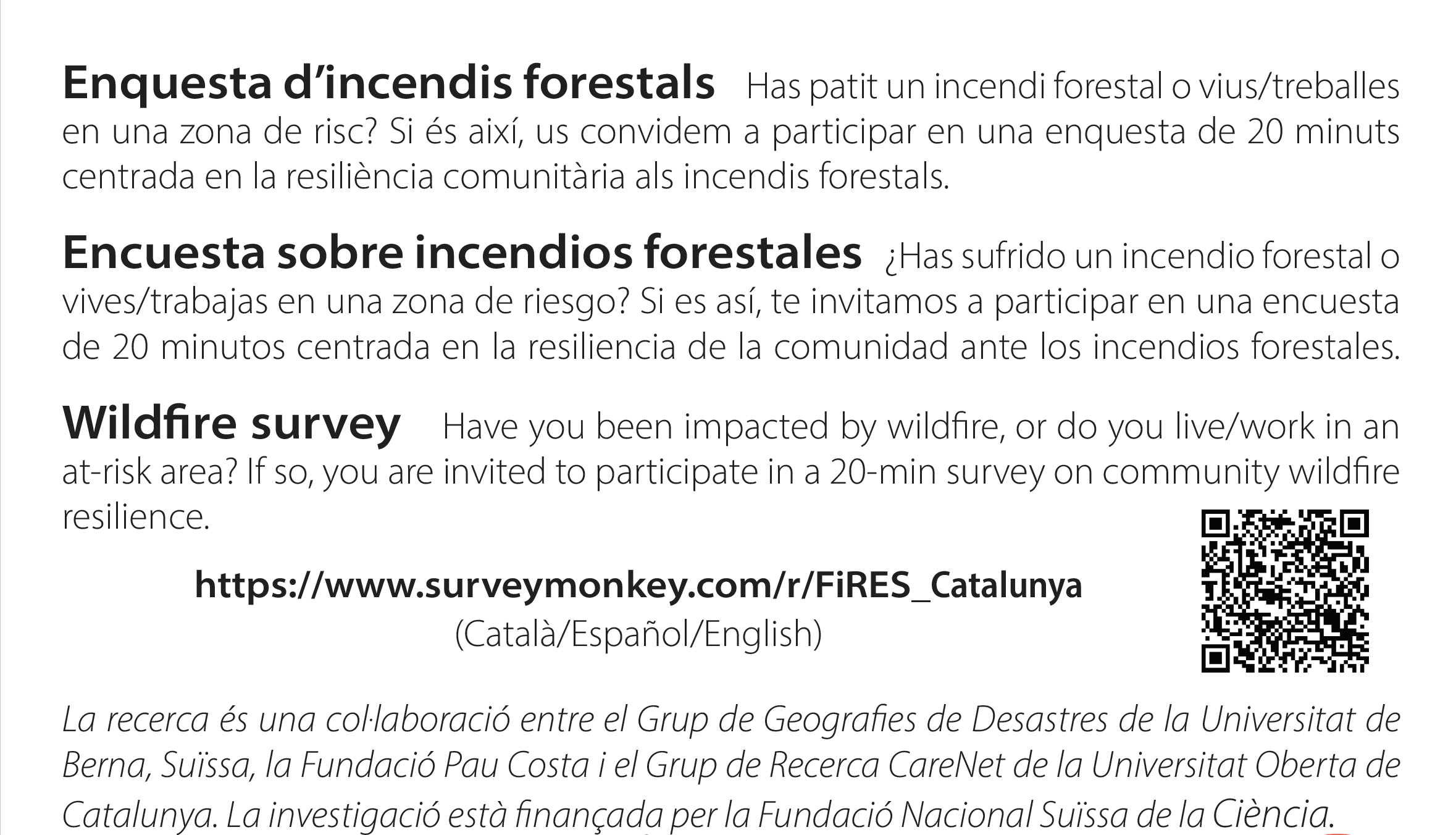
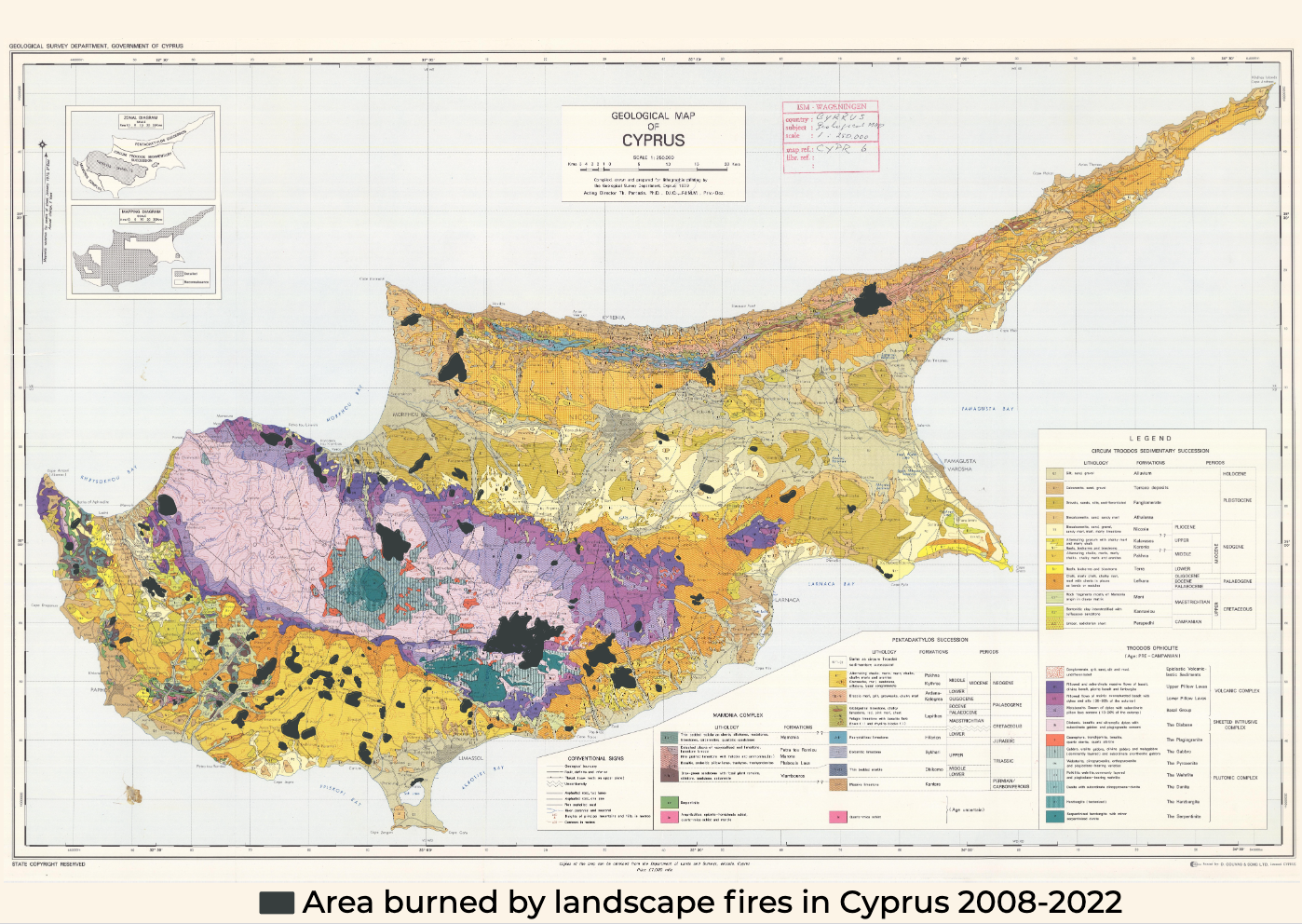
Living with wildfire in Cyprus – survey now live!
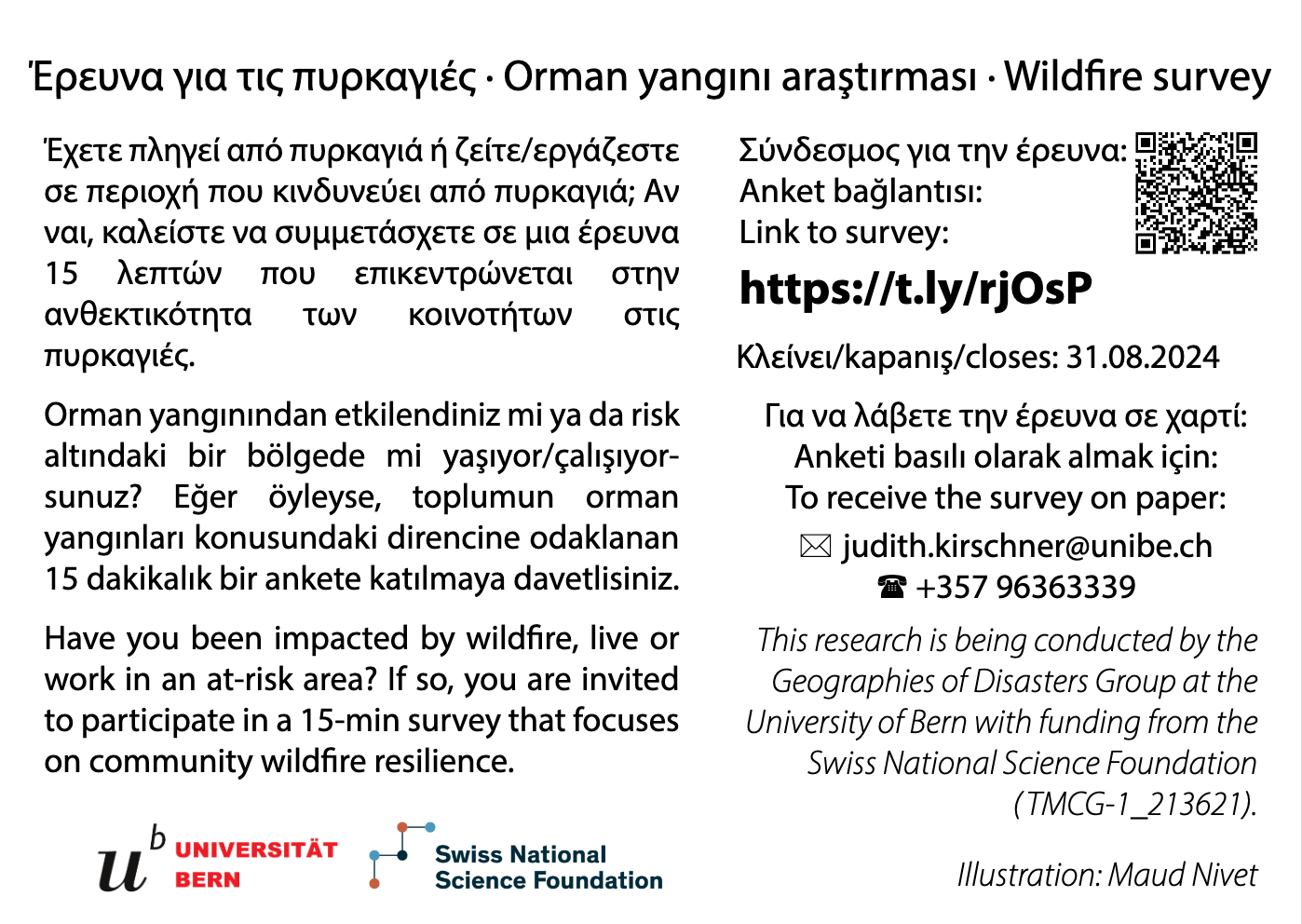
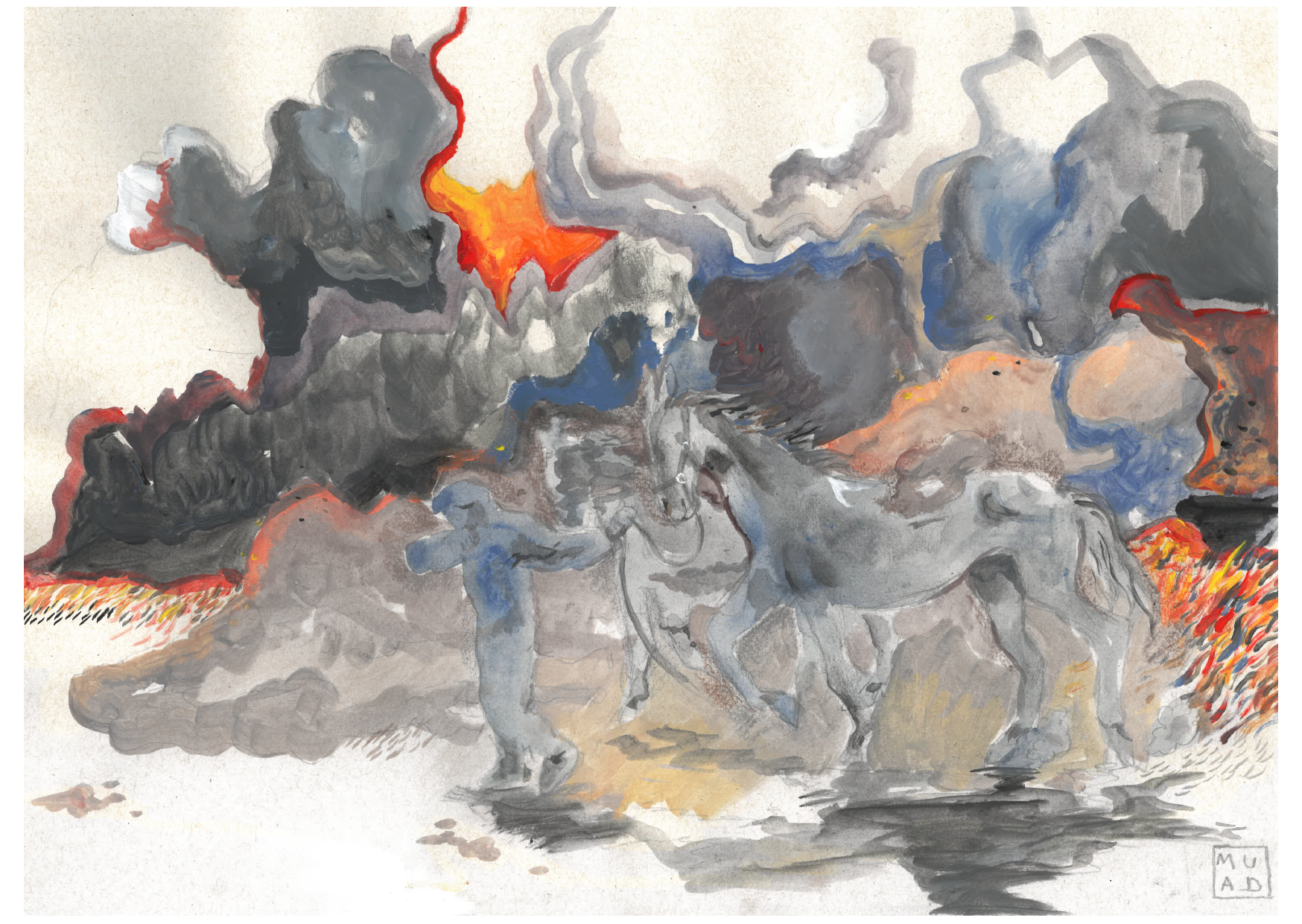
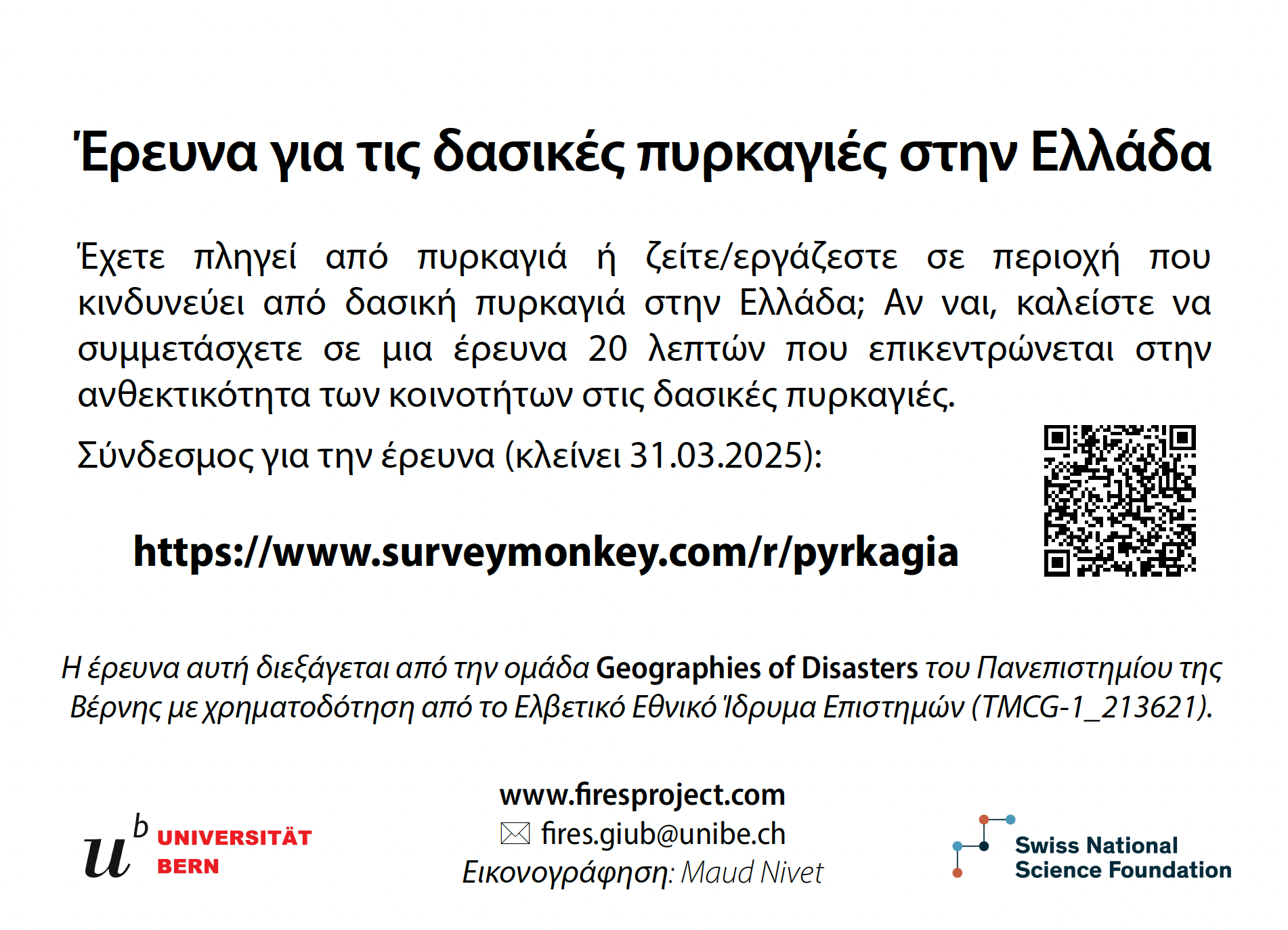
Έρευνα για τις πυρκαγιές | Orman yangını araştırması | Wildfire survey
February 21, 2024
News feature!
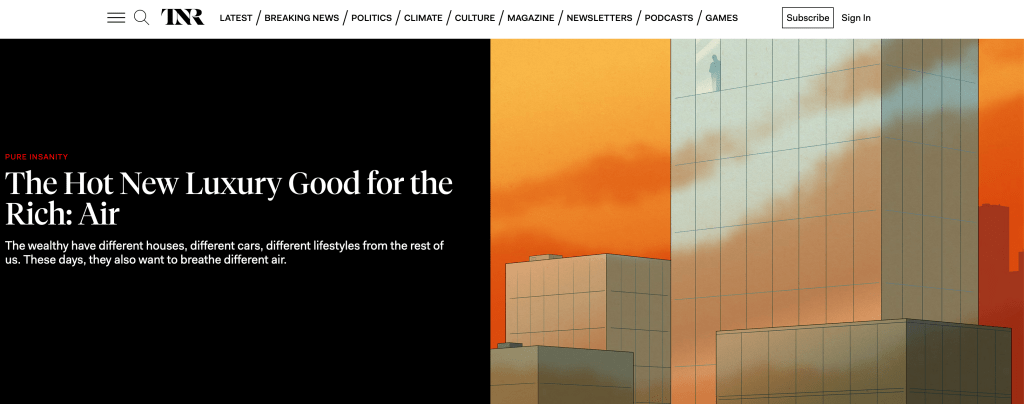
As weeks or months of chronic smoke conditions caused by wildfires impeded “business as usual”, the quest to secure clean air has – in and of itself – become a business. Late last year, science journalist Shayla Love interviewed Christine for an article in The New Republic about The Hot New Luxury Good for the Rich: Air. We discussed the varied ways inequity is perpetuated when clean air is treated as a commodity, as well as the immense potential technological innovation holds if it drives social betterment, not just luxury goods.
Smoke from wildfires doesn’t care about neighborhoods or country borders. Primarily made up of fine particulate matter less than 2.5 microns long, it is mobile, and small enough to intrude nearly anywhere – high-rises and homes, airways and lungs. Drifting smoke has made the consequences of catastrophic wildfires a reality far from the fire front. More than just an inconvenience to everyday life, it also poses significant potential danger to human health.
This is a reality already experienced with an alarming frequency in North America and Australia in recent summers. It is also likely to be the first direct experience many Europeans have with wildfire, as the continent as a whole becomes more fire-prone. Smoke from wildfires, like sand from the Saharan desert, will likely travel and choke the skies in low-lying cities in Switzerland long before actual flames become a regular occurrence in the country.
My colleague Gregory Simon and I also wrote about the unequal social consequences of wildfire smoke for Bay Nature in 2021 after a season of chronic smoke conditions in California.
October 23, 2023
Survey – now live!
Living with wildfire in the UK and Ireland
Do you live in the UK or Ireland? Have you been impacted by wildfire or experienced smokey conditions, or do you live or work in an area that is at-risk from wildfire, or where fire is used as a land management tool?
If so, you are invited to participate in a 15-minute online survey that focuses on community wildfire resilience.
For more details and to participate in the survey, please click here.
October 15, 2023
News feature!
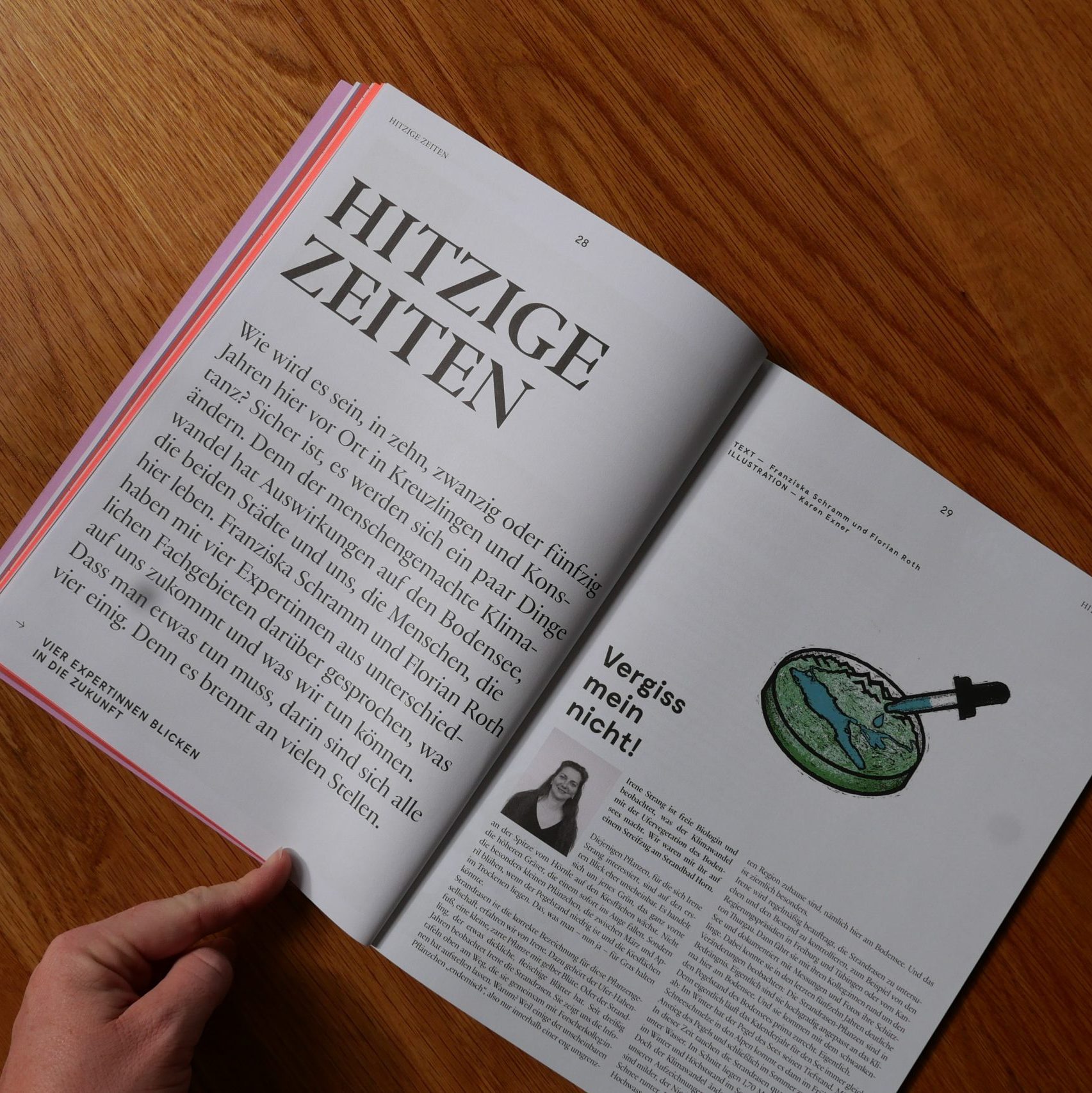
Wie wird der Klimawandel Orte wie die Bodenseeregion in der Schweiz verändern, und was können wir tun? Mein Brennpunkt Waldbrand ist eine von vier Geschichten, die einzeln im karla, neuer Journalismus für Konstanz veröffentlicht wurden.
In einer weiteren der vier Geschichten beobachtet die freie Biologin Irene Strang, wie sich der Klimawandel auf die Ufervegetation des Bodensees auswirkt. Zwei weitere Geschichten werden bald veröffentlicht.
Im gedruckten NUN Magazin Ausgabe #11 werden die vier Fachgebiete zu einem Artikel zusammengeführt: “Hitzige Zeiten: Vier Expertinnen blinken in die Zukunft”.
Vielen Dank an Florian Roth und Franziska Schramm für die Einladung und den interessanten Artikel.
March 16, 2023
Poster presentation!
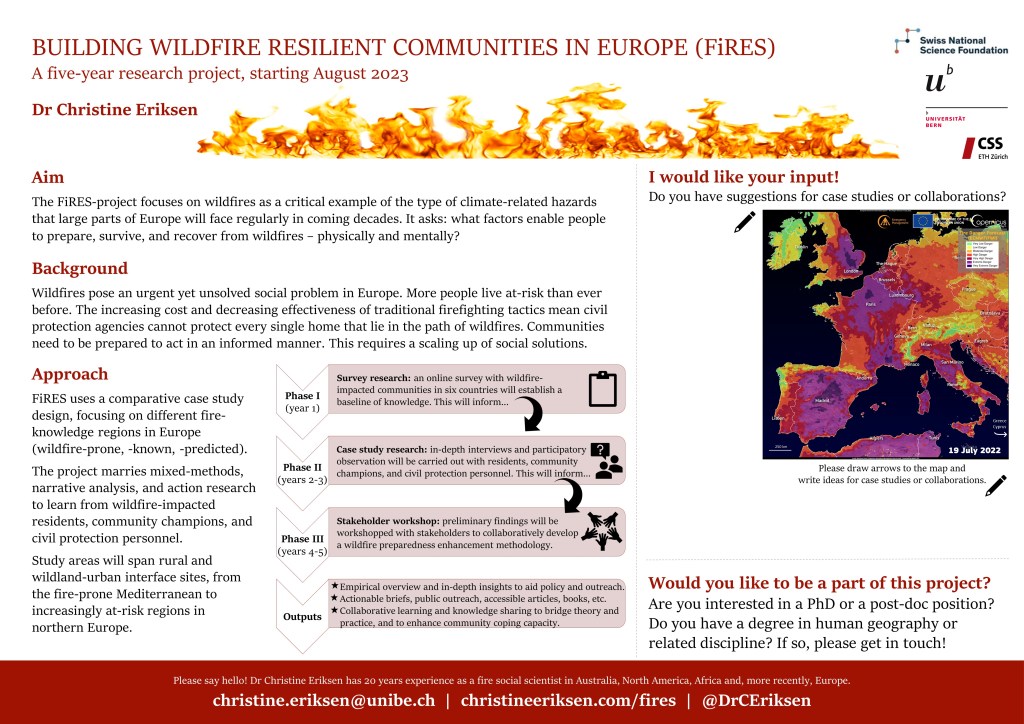
I was invited to provide expert feedback to presenters at the two-day PyroLife Conference in Barcelona, Spain, which also gave me the opportunity to present a poster on the FiRES project.
February 8, 2023
Grant announcement!
It was announced today that I have been awarded a five-year Consolidator Grant by the Swiss National Science Foundation. In this blog-post you can read about my proposed project ‘FiRES’, the grant application process, and the people who had my back.
 Dr. Christine Eriksen